


Abstract
Patio swings look simple—until you live with one. People usually buy based on photos, then run into the same headaches: wobbling frames, squeaky hardware, cushions that trap moisture, canopies that fade fast, and a “relaxing” seat that somehow feels awkward after ten minutes. This guide breaks down the decisions that actually matter: where the swing will live, how weather changes the materials you should choose, what comfort features make a real difference, and how to avoid common safety and assembly mistakes. I’ll also share a practical maintenance plan (so your swing stays smooth, quiet, and good-looking), plus a quick checklist you can use before you buy.
Quick Outline
- Match the swing type to your space (freestanding, porch-hung, canopy models)
- Choose materials that fit your climate (rain, sun, salt air, freeze-thaw)
- Prioritize comfort factors most buyers miss (seat angle, depth, suspension, cushions)
- Get stability and safety right (anchors, clearance, weight capacity, child/pet considerations)
- Use a simple upkeep routine to prevent rust, squeaks, and fabric damage
- FAQ answers to the questions people ask after the swing arrives
Table of Contents
- 1) Start With the Real Pain Points
- 2) Pick the Right Patio Swing Style for Your Space
- 3) Materials That Hold Up in Real Weather
- 4) Comfort Features That Matter More Than Looks
- 5) Safety, Stability, and Setup Without Regrets
- 6) A Maintenance Plan You’ll Actually Follow
- 7) A Buyer’s Checklist Before You Click “Order”
- FAQ
1) Start With the Real Pain Points
Most people don’t dislike patio swings—they dislike the “surprises” that show up after delivery. Here are the most common problems I hear, and what they usually mean in practice:
- “It’s wobbly.” The footprint is too narrow for the seat width, the base isn’t level, or the frame needs anchoring.
- “It squeaks every time we move.” Dry metal-on-metal contact, loose fasteners, or low-quality bushings at swing points.
- “The canopy faded fast.” Fabric without strong UV resistance or a location that gets intense midday sun.
- “Cushions stayed damp and started smelling.” Foam that holds moisture, covers without breathability, or no airflow under the seat.
- “It’s not as comfortable as it looks.” Seat angle and depth are off, the suspension is too stiff, or the cushion thickness is decorative, not supportive.
If you solve these five issues up front, you’ll end up with a swing that gets used daily—not one that becomes a “pretty background object.”
2) Pick the Right Patio Swing Style for Your Space
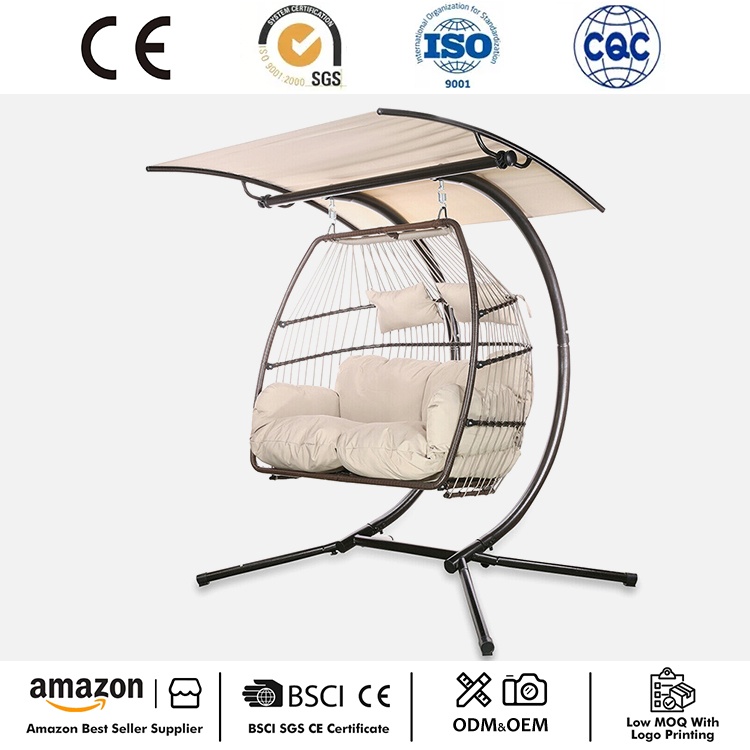
Your first decision isn’t color or style—it’s the swing format. Each type has different demands for space, installation, and long-term comfort.
| Swing Type | Best For | Common Mistake | What to Check |
|---|---|---|---|
| Freestanding patio swing | Renters, patios without beams, flexible placement | Putting it on uneven pavers or grass | Wide base, anti-slip feet, clearance for full arc |
| Porch-hung swing | Covered porches, classic look, smoother motion | Hanging from under-rated hardware | Rated hang kit, beam condition, chain/rope length |
| Canopy patio swing | Hot, sunny yards; midday lounging | Buying canopy fabric that isn’t made for sun | UV-resistant canopy, tilt range, stable frame |
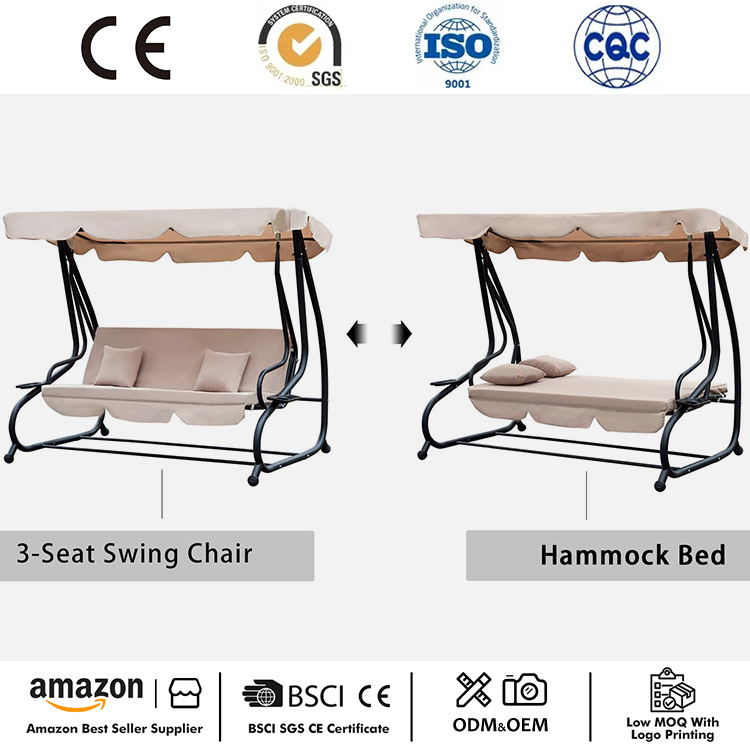
| Daybed-style swing | Napping, reading, “outdoor couch” feel | Ignoring footprint (it’s bigger than you think) | Space for side-to-side clearance, cushion drainage |
Space tip I use all the time: measure the swing’s seat width, then add at least 24 inches (60 cm) on each side for comfortable “elbow room” and motion. For front-to-back clearance, plan for the swing arc plus a walking lane—nobody wants to sidestep a moving swing with a coffee in hand.
3) Materials That Hold Up in Real Weather
Weather doesn’t just “age” a swing—it exposes weak choices quickly. Your climate should decide your materials. Here’s a simple way to think about it:
- Humid / rainy areas: Favor rust-resistant frames, quick-dry cushions, and breathable covers. Avoid anything that traps water under the seat.
- Hot / intense sun: Look for strong UV resistance in fabric and finishes. Dark colors can feel much hotter on bare skin.
- Coastal / salt air: Salt accelerates corrosion. Prioritize protective coatings and hardware that won’t “freeze” over time.
- Cold / freeze-thaw: Moisture expands in tiny cracks. Choose materials that don’t split easily and store cushions indoors when possible.
If you’re sourcing for a project or retail program, it helps to work with a supplier that understands outdoor conditions beyond showroom lighting. For example, Ningbo Yingmin Imp.& Exp. Co.,Ltd. focuses on outdoor product manufacturing and export, and that kind of experience matters when you need consistent materials, stable packaging, and practical design details that survive shipping and daily use.
4) Comfort Features That Matter More Than Looks
Comfort isn’t “softness.” Comfort is support, posture, and motion. The following details are what separate a swing you sit on from a swing you melt into:
- Seat depth: Too shallow and you feel perched; too deep and shorter users lose back support. Aim for a depth that lets your back rest without your knees floating.
- Back angle: A slightly reclined back supports relaxing without forcing you to slouch. If you want reading comfort, a moderate angle is usually better than a deep recline.
- Suspension feel: The “swing points” should move smoothly. If the motion feels jerky, you’ll stop using it.
- Armrests and edges: Hard edges can dig in. Rounded edges or padded arm areas are small details that change everything on longer sits.
- Cushion construction: Thick doesn’t always mean supportive. Look for cushions that keep shape and dry efficiently after humidity or light rain.
A practical test I recommend: imagine a 20-minute sit, not a 20-second photo. Do you have a place to rest your arms? Does your lower back feel supported? If you’d naturally want a pillow behind you, that swing may need better geometry.
5) Safety, Stability, and Setup Without Regrets
Patio swings move—so safety is about managing motion, not eliminating it. The goal is a stable base, reliable hardware, and enough clearance so the swing never becomes a surprise hazard.
- Weight capacity: Don’t shop by seat count alone. Two adults can vary wildly in combined weight, and dynamic swinging adds stress.
- Level surface: A swing placed on an uneven surface will twist under load and loosen over time. Use leveling pads or choose a flatter location.
- Hardware quality: The highest stress points are the hang hooks, chains, springs, and connecting bolts. These parts deserve extra attention.
- Clearance zone: Keep the swing arc away from railings, walls, fire pits, and sharp-edged furniture.
- Kids and pets: Set a simple rule: no pushing from the side, and no crawling under a moving swing. This one rule prevents most backyard mishaps.
Assembly tip from real life: tighten hardware in stages. If you fully tighten one side early, the frame can “lock” slightly out of square. Lightly assemble everything first, align, then torque down evenly.
6) A Maintenance Plan You’ll Actually Follow
The best patio swing is the one that stays quiet, clean, and easy. You don’t need complicated care—just a small routine that prevents the usual failures.
| When | What to Do | Why It Helps |
|---|---|---|
| Weekly | Quick wipe of frame, shake out cushions | Stops grime from becoming permanent and keeps fabric fresh |
| Monthly | Check bolts and swing points; re-tighten if needed | Prevents wobble and reduces squeaks |
| Seasonal | Deep clean cushions; inspect canopy for wear | Extends fabric life and keeps the swing comfortable |
| Before winter / storms | Store cushions indoors; cover or relocate swing if possible | Prevents moisture damage and weather-related corrosion |
If squeaks appear, don’t ignore them. Squeaks usually mean friction or looseness, and both can shorten the life of the moving joints. A quick check-and-adjust now beats a repair later.
7) A Buyer’s Checklist Before You Click “Order”
Use this checklist to avoid the most expensive mistake: buying a swing that “fits the photo” but doesn’t fit your life.
- Location: Covered porch, open patio, poolside, garden corner—each changes what materials you need.
- Footprint: Confirm total width and depth, then add clearance for swing motion and walkways.
- Primary use: Quick chats, long reading sessions, napping, family seating—comfort priorities shift.
- Weather exposure: Sun intensity, rain patterns, wind, and salty air should guide frame and fabric choices.
- Support and stability: Verify weight capacity and consider anchoring if your surface is slick or uneven.
- Cushion practicality: Removable covers, drying speed, and whether you can store them easily.
- After-purchase reality: Replacement parts, clear assembly instructions, and packaging that protects the finish.
If you’re buying for a business program—hospitality patios, property management, or retail sourcing—consistency is the hidden factor. A swing that’s easy to assemble, stable on real surfaces, and designed for weather reduces complaints and returns.
FAQ
Q: How do I stop a patio swing from wobbling?
Start with the surface: level it or move to a flatter spot. Then tighten bolts evenly and re-check after a few days of use. If the swing is freestanding and still shifts, consider anti-slip pads or anchoring solutions designed for your patio surface.
Q: What causes squeaking, and how do I fix it?
Squeaks usually come from friction at swing points or slightly loose hardware. Inspect the hang points, springs, and connecting bolts. Tighten where needed and keep moving joints clean. Addressing squeaks early prevents wear.
Q: Are canopy patio swings worth it?
If your patio gets strong sun, a canopy can change how often you actually use the swing—shade makes it comfortable during peak heat. The key is choosing a canopy fabric that resists fading and a frame that stays stable in wind.
Q: What’s the best way to keep cushions from getting musty?
Airflow is your friend. Avoid leaving cushions compressed against wet surfaces, and store them indoors after heavy rain. Choose cushions with removable covers when possible, and let them fully dry before covering the swing.
Q: How much space do I need behind and in front of the swing?
Plan for the full swing arc plus a safe walking lane. If people will pass nearby, give extra clearance so no one brushes against a moving seat. More space also makes the area feel calmer and more inviting.
Q: Can I install a porch swing without professional help?
Many people do, but only if the beam and hardware are correctly rated and installed. If you’re unsure about the structure overhead, it’s safer to consult a qualified installer—especially for heavier swings or frequent use.
Ready to Choose a Patio Swing That Actually Gets Used?
The best patio swings aren’t the ones that look perfect for a photo—they’re the ones that feel stable, stay comfortable, and hold up through the seasons. If you’re sourcing patio swings for a project or product line and want options that balance comfort, durability, and practical details, contact us at Ningbo Yingmin Imp.& Exp. Co.,Ltd. and tell us what kind of outdoor space you’re building—we’ll help you match the right swing to your real-world needs.